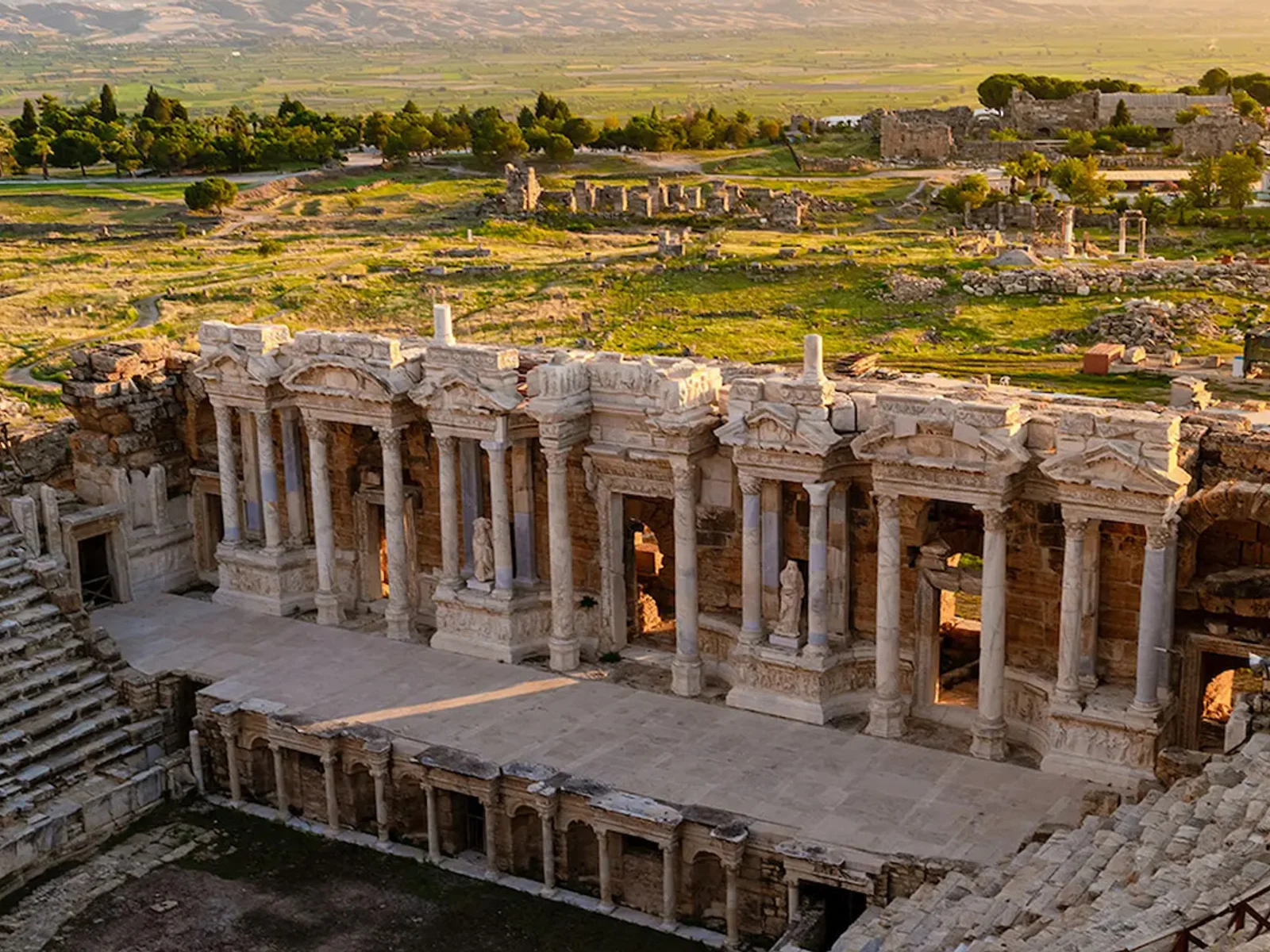
Hierapolis: Ancient City of History and Healing
Nestled in southwestern Turkey, near the modern city of Denizli, lies the ancient city of Hierapolis, a UNESCO World Heritage Site brimming with historical significance and architectural wonders. Dating back to the Hellenistic period, Hierapolis flourished as a prominent Greco-Roman city and spa destination, boasting stunning ruins that continue to captivate visitors from around the world.
A Marvel of Ancient Engineering
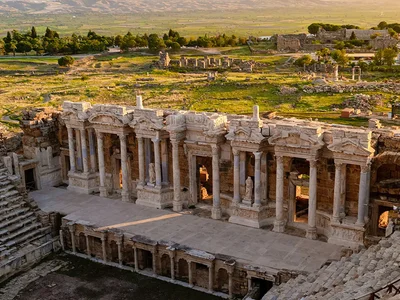
Hierapolis is renowned for its well-preserved theater, which once accommodated up to 15,000 spectators and served as a venue for theatrical performances and religious ceremonies. The theater's remarkable acoustics and commanding views of the surrounding landscape make it a must-see attraction for history enthusiasts and architecture aficionados alike.
Sacred Springs and Thermal Baths
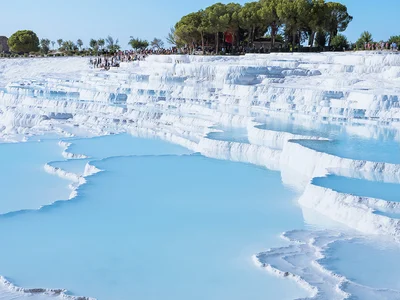
One of the city's most iconic features is its sacred hot springs, revered for their healing properties since antiquity. Visitors can explore the ancient thermal baths, where residents and pilgrims once sought relief from various ailments. Additionally, the intricately decorated Martyrium of St. Philip, dedicated to the Apostle Philip, stands as a testament to the city's religious significance and spiritual heritage.
A Tapestry of History and Culture
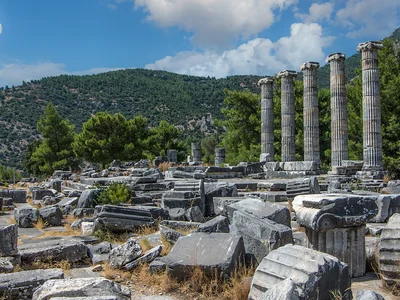
As you wander through the ruins of Hierapolis, you'll encounter a rich tapestry of history and culture, from the well-preserved necropolis, adorned with elaborately carved sarcophagi, to the imposing remnants of the city's ancient walls. Don't miss the opportunity to stroll along the city's colonnaded streets, lined with grandiose monuments and temples, offering insight into the daily life and rituals of its inhabitants.
Whether you're drawn to its architectural marvels, therapeutic hot springs, or rich history, Hierapolis offers a truly immersive journey through the ancient world. As you explore its captivating ruins and sacred sites, you'll find yourself transported back in time to a bygone era of splendor and significance, leaving you with a newfound appreciation for Turkey's remarkable cultural heritage.